
Chasing the Curve: David Loi’s Play of Light, Shadow, and Speed to Sell the Automotive Dream
The challenge of automotive photography in Texas or elsewhere is unique: capturing a static object—a machine built of reflective paint, glass, and polished chrome—and making it breathe with speed and desire. It’s an act of visual alchemy, where a photographer must become part engineer, part sculptor, and part storyteller. Few masters the delicate balance of technical precision and artistic vision quite like David Loi.
Loi isn’t just shooting cars; he’s documenting an emotion, a fantasy, and a promise of what life behind the wheel could be. His work, often featured in high-end commercial campaigns, doesn’t rely on brute-force lighting or obvious post-production tricks. Instead, it’s a calculated dance between light, location, and geometry. We sat down with Loi to dissect his method, revealing a foundational truth of the craft: the single most critical element in automotive photography isn’t the camera, the lens, or the software—it’s the photographer’s eye for subtle, directional light.
I. The Sculptor’s Light: Carving Mass with Shadow
In the hyper-competitive world of commercial imagery, flat light is the enemy. Flat light renders a million-dollar machine with all the drama of a dusty filing cabinet. Loi’s philosophy centers on the precise application of light and, more importantly, the strategic use of shadow to define and dramatize a vehicle’s form.
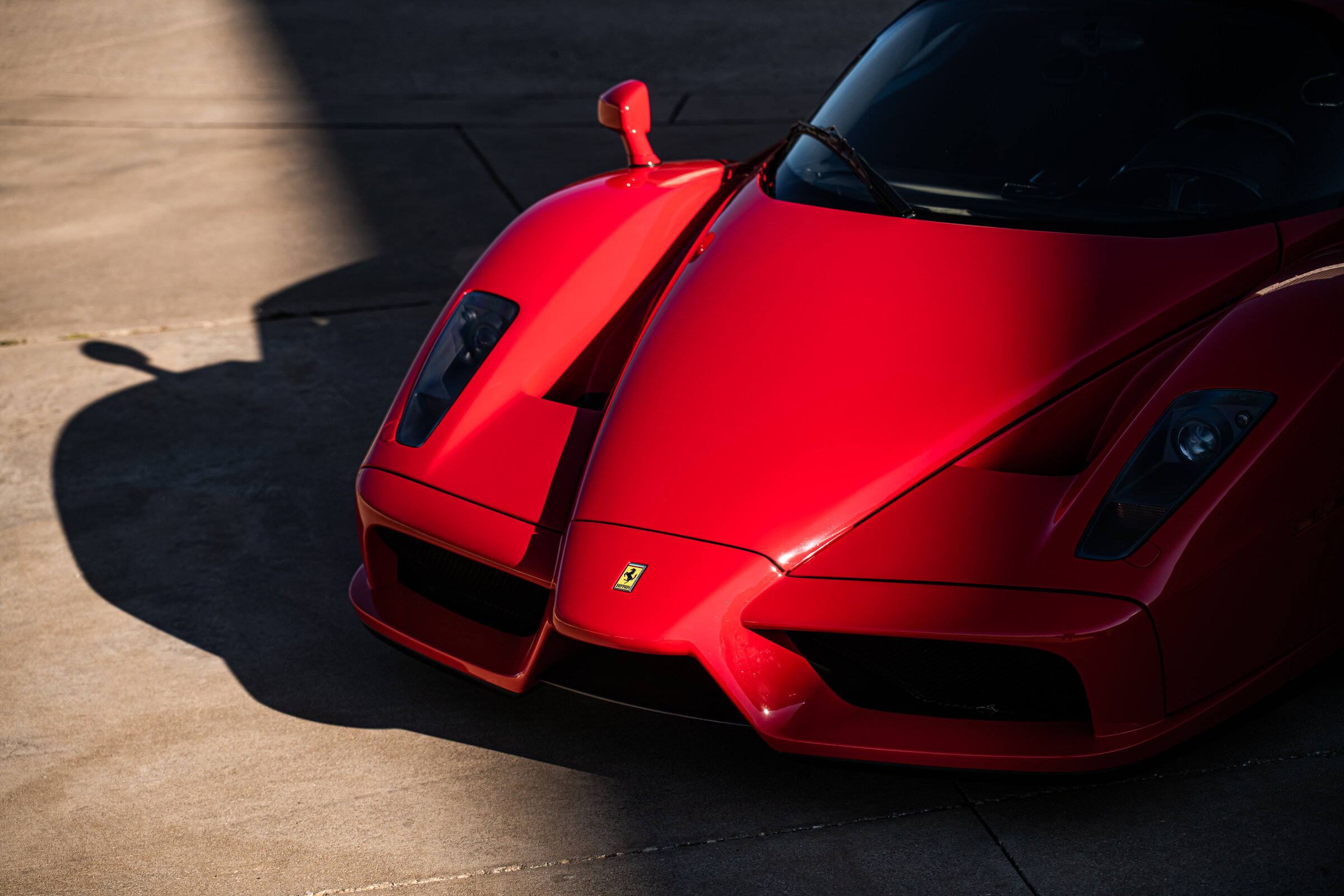
“For automotive photography, I gravitate toward golden hour or blue hour,” Loi explains, referring to the brief, precious periods immediately after sunrise or before sunset. The appeal of these hours isn’t just the warmth or the color shift; it’s the directionality. The sun sits low on the horizon, casting long, raking shadows that visually etch the subtle character lines of a vehicle’s body. This directional light is the chisel that carves mass into the metal.
Loi views shadows not as absences, but as compositional tools. “I use shadows to hide and make cars much more dramatic, helping them stand out in the image,” he notes. A well-placed shadow can add a layer of intrigue, allowing the viewer’s imagination to fill in the unseen portions of the vehicle. This deliberate visual mystery—hiding part of the silhouette—communicates the car’s sculptural quality far more effectively than harsh, all-encompassing brightness.
“Light is great because it can be used to accentuate shapes and curves that might be otherwise missing in flat lighting,” Loi stresses. This is why he actively avoids non-directional light, particularly the harsh, overhead glare of mid-day. The challenge of shooting under a high noon sun, where light flattens surfaces and creates unpleasant, sharp hot spots, is something Loi identifies as a constant “annoying flaw.” It requires immense skill in post-production, often making the task harder than simply waiting for better natural conditions.
Augmenting the Environment: The Kiss of Strobe
While natural light sets the stage, Loi is prepared to intervene. His tools include the reliable Cheetah Stand and Godox Strobes. These aren’t used to overpower the sun, but to refine the details. They provide a “kiss of light” to enhance interiors, bring out small details in dark wheel wells, or subtly define a feature that the ambient light missed.
This precise enhancement extends to the notoriously tricky task of shooting the cockpit and interior. Modern car interiors are often a minefield of reflective surfaces, from infotainment screens to glossy trim. Loi’s technique is a blend of additive and subtractive lighting.
“A car’s interior can be enhanced with a strobe and a Cheetah Stand softbox,” he reveals. The softbox diffuses the harsh flash, turning it into a controllable pool of light that mimics the soft, even wash of professional studio lighting. This is then meticulously balanced against the environmental light bleeding in from the outside. To tackle the inevitable glare on glass and screens, Loi relies on a non-negotiable accessory: the polarizer. A circular polarizer is essential for cutting distracting reflections, allowing the rich textures of leather, stitching, and carbon fiber to take center stage, rather than having the viewer distracted by the reflection of the camera or the sky.
II. The Cartography of Desire: Location and Storytelling
Loi understands that a car does not exist in a vacuum. It is an artifact of transportation, yes, but more importantly, it is a key component in a lifestyle narrative. The location, therefore, must function as a complementary character—not merely a backdrop.
“Depending on the kind of car, I try to put it in a location that the owner might be imagining them enjoying the drive in,” he explains. This is the heart of commercial automotive imagery: selling the dream.
The choice of setting is never random; it’s an act of deep empathy with the car’s intended user. If the subject is a high-performance sports car, the environment must scream speed, precision, and adrenaline—a race track or a clean, winding canyon road. If the subject is a rugged, off-road truck or SUV, the setting shifts dramatically to reflect utility and freedom—a farm, a secluded campsite, or a dusty trail. The location provides the aspirational context. Loi is there to validate the fantasy: “I am there to help sell the dream of what you can see yourself in.”
This location-centric storytelling is the first layer of the visual narrative. The second layer is built around the car itself, through the identification of its unique design language.
Identifying the Signature Element
When approaching a new model, Loi begins with a forensic analysis of its design. He is searching for the distinctive shape or pattern that differentiates it from the rest of the market. These elements are the focal points around which the entire shoot’s visual story is constructed.
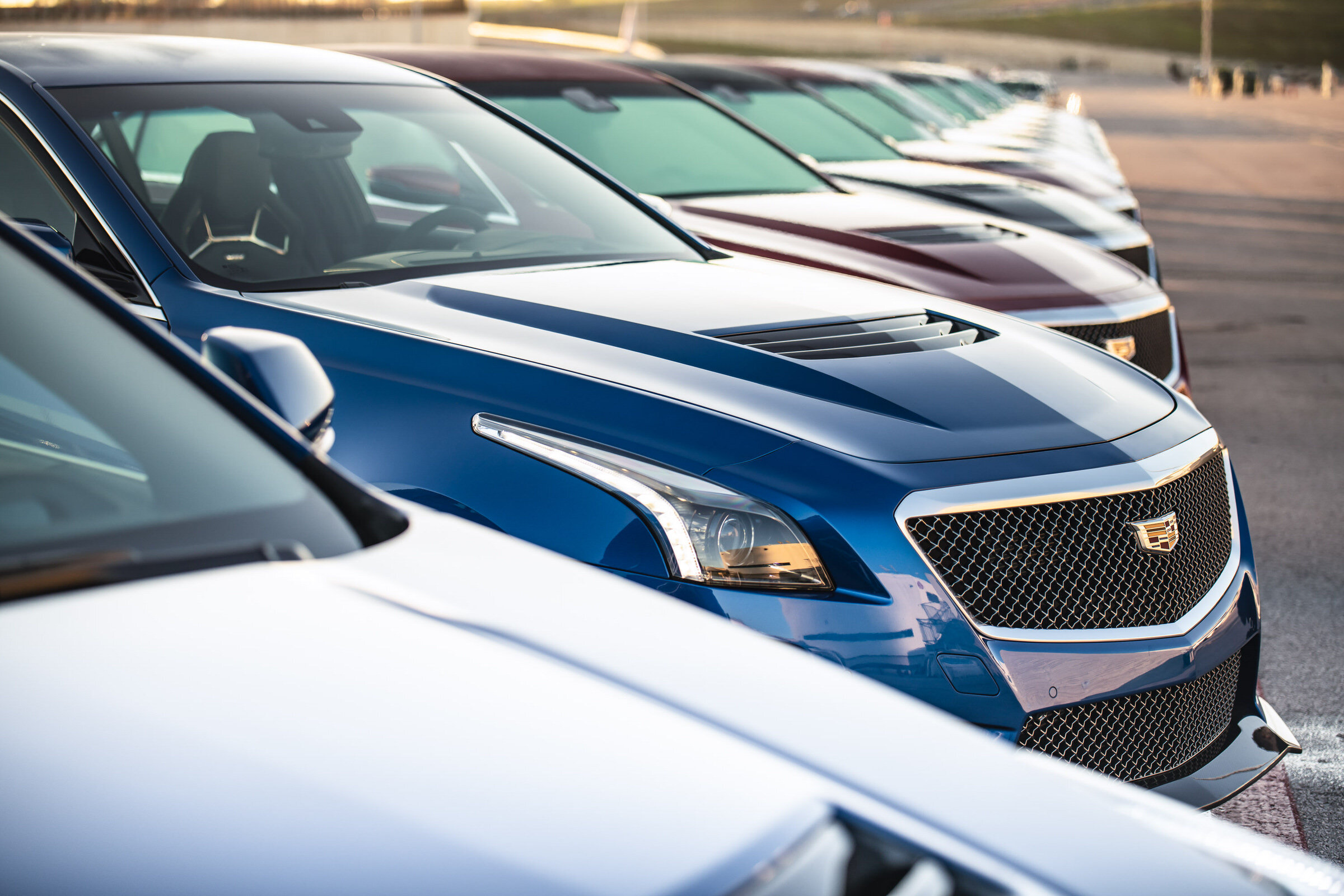
“Usually, you’ll see design elements in the headlights or the nose,” he notes. Modern lighting clusters, from complex LEDs to sculpted daytime running lights, are often the aesthetic signature of a marque. Beyond the front fascia, he looks for character lines—the subtle creases and folds engineered into the side panels. These lines, which often dictate how light flows across the vehicle, are enhanced using the directional light and strategic shadows he is so skilled at creating. By focusing the viewer’s attention on these signature elements, Loi ensures the photograph doesn’t just show a car, but that specific car, communicating its brand identity instantly.
Loi’s technique for translating abstract brand concepts—like “rugged durability” or “opulent luxury”—relies heavily on this blend of vehicle and environment. The luxury sedan is placed in front of polished marble or sleek urban architecture, often paired with people whose fashion and bearing embody affluence. The rugged utility vehicle is cast against the raw power of nature, perhaps with a subject wearing utilitarian gear, suggesting capability and adventure. In both cases, the location and the people in the photos become the tangible cues that convey the abstract concept.
III. The Art of the Compressional Blur: Motion and the Magic Lens
A photograph of a stationary car is a portrait; a photograph of a moving car is an action film. Loi is a master of capturing motion, transforming the inherently static nature of a photograph into a dynamic experience that conveys a genuine sense of speed.
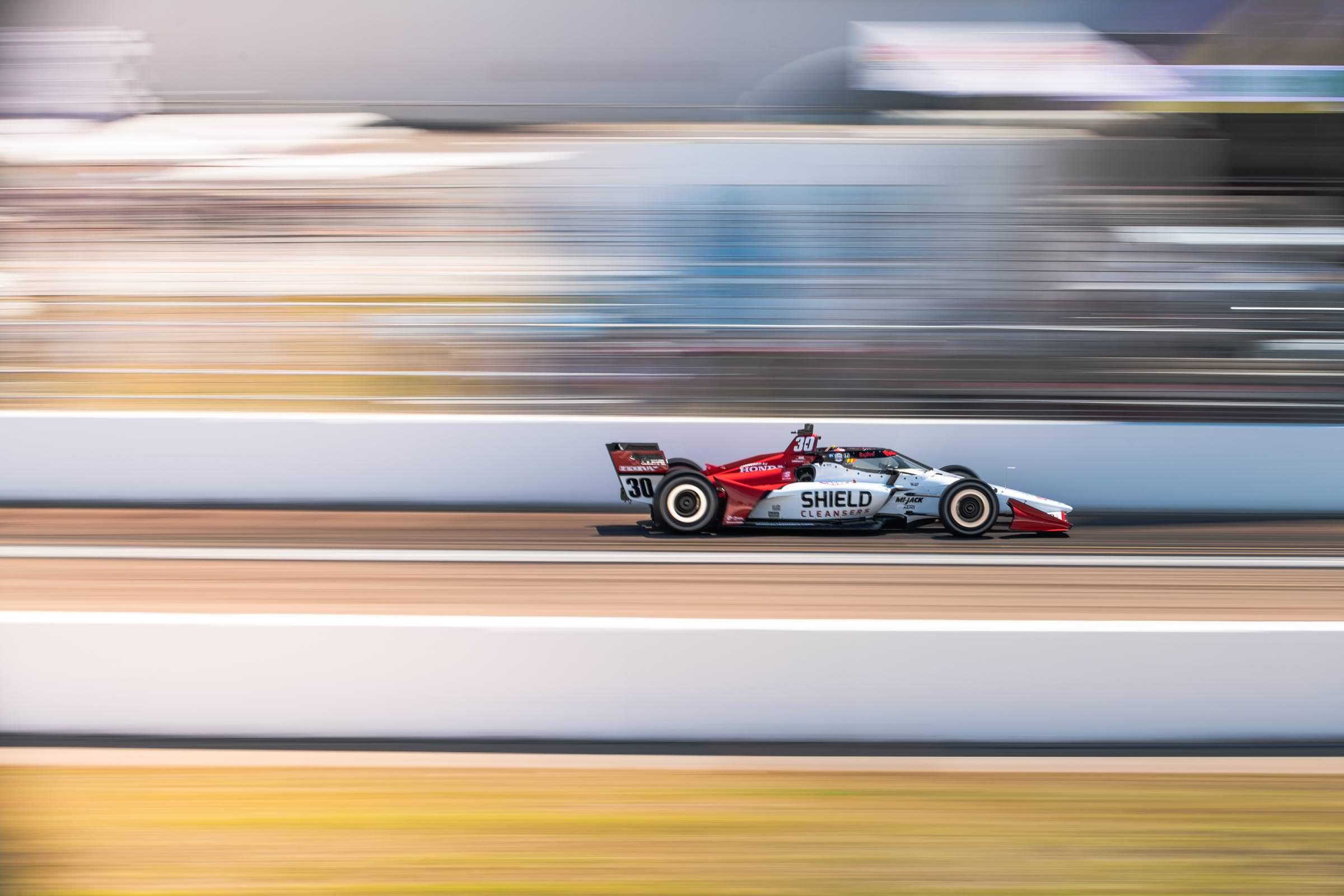
His foundational technique for motion is classic, yet flawlessly executed: slowing down the shutter and panning with the car. By dropping the shutter speed (often to fractions of a second like 1/30th or 1/60th) and smoothly tracking the vehicle’s movement, the photographer renders the car sharp and clear while the background streaks into a beautiful, linear blur. This blur is the visual shorthand for velocity. Crucially, the slow shutter also allows the wheels to show movement—a spinning tire is indispensable for confirming the sense of motion. A fast shutter speed that freezes the wheels makes the car look like it’s simply parked on a moving background.
When capturing these high-speed moments, or indeed, any shot that frames the entire vehicle, Loi champions a lens often favored by portrait photographers, yet overlooked in the wider world of automotive work: the 70-200mm telephoto lens.
“I think the perfect car photography lens is a longer lens, like the 70-200,” he asserts. The reason is simple and tied directly to the physics of perspective. Shorter, wider lenses tend to distort a car’s form, making the nearest components look unnaturally large and stretched, which can make the car appear bulbous or toy-like. The longer focal length, conversely, provides a highly sought-after effect known as compression.
Lens compression visually “flattens” the scene, drawing the background closer to the subject. This is critical in automotive work because it ensures the car looks visually correct in weight and proportion, rendering the vehicle’s geometry faithfully, while making the background a densely packed tapestry of color and texture directly behind the car. This compressed perspective is key to the high-impact, professional aesthetic seen in commercial car ads.
A Disregard for Dogma: Rules are Made to be Broken
In composition, Loi’s approach is one of informed rebellion. While he knows and understands the classic rules—the rule of thirds, leading lines, framing—he treats them as mere starting guidelines.
“I break the ‘classic’ rules all the time,” he admits. The justification for this deliberate breaking of dogma is simple: results. “As long as the photos look good and people are being drawn to the photos, I think it’s worth the effort to break.”
Loi’s goal isn’t to create a geometrically perfect image, but an emotionally resonant one. If a centered, symmetrical shot creates the strongest emotional punch, or if placing the car right up against the edge of the frame generates a dynamic tension, he will do it. For him, client satisfaction and visual impact supersede antiquated academic mandates. The visual effect he is always aiming for is impact and engagement—if the image is compelling and successful, then the composition is justified.
IV. The Unseen Choreography: Post-Production and Precision
The work doesn’t end when the shutter clicks. While many assume post-production is dominated by complex digital manipulation, Loi reveals that the single most critical, time-consuming, and demanding part of his workflow is an invisible one: precision placement.
“It takes a lot of time to move a vehicle into the correct light aligned in a good location to make sure that the lighting and subject shows off the car in the best possible way,” Loi observes.
While this step happens before the final capture, it dictates the commercial quality of the image and is, in essence, the defining element of the pre-visualization process that leads to post-production success. When a photograph looks perfect—the headlight glints just so, the character line is perfectly highlighted, and the background falls away with ideal compression—it’s not luck. It is the result of countless incremental adjustments, often involving physically moving a half-ton vehicle by mere inches.
“Getting this done just right can be very time consuming as you’re always moving the car around to the direction of the light and the background.” This patient choreography in real-time saves hours of digital repair later.
Avoiding the Pitfalls
In addition to the inherent challenge of high-noon lighting, Loi highlights a specific, seemingly small flaw that plagues commercial automotive shoots: the angle of the steering wheel and tires.
“Also having the steering wheel turned away from the car, showing the tread of the tires is not a good look either,” he notes. In high-end commercial imagery, the tires should generally be turned into the car, showcasing the clean sidewall or the aggressive stance of the wheel face, not the dirty, unappealing tread. These subtle details, invisible to the casual viewer, are the hallmarks of a professionally executed shoot.
The Unforeseen Save
Loi’s commitment to delivering the vision was tested during a recent shoot that required a complete pivot. The original concept was cinematic and high-octane: drag races between cars and airplanes.
“We once had a photoshoot with cars drag racing some airplanes but we had to change due to an issue with the airplanes,” he recalls. This sudden, dramatic shift in logistics could have sunk the entire project. Instead, Loi and his team made a spontaneous creative decision that saved the day. “We found a race track instead and changed up the subjects so that it still met expectations.” They utilized the readily available environment to create a new, but equally compelling narrative centered on speed and performance, ensuring the client’s core objectives were still met, even if the visual was different from the initial pitch.
Selling the Fantasy
David Loi’s approach to automotive photography is a masterclass in controlled chaos and intentional design. It is built not on chance, but on a deep understanding of physics, geometry, and psychology. He uses the fleeting glow of the golden hour to sculpt form, a telephoto lens to respect proportion, and shadows to inject drama.
Ultimately, Loi’s work isn’t merely about documenting metal and rubber; it’s about selling the fantasy of ownership, adventure, and performance. Every decision, from the choice of lens to the fractional movement of the car, is calculated to make the viewer imagine themselves enjoying the ride. He is the visual cartographer of the open road, ensuring that the dream of the drive is captured long before the key is turned in the ignition.

Capture High-Speed Precision on Set.
From dynamic trackside action to complex studio light painting and multi-plate composites, partner with David Loi Studios for commercial automotive campaigns across Texas and worldwide.
Speak directly with David regarding upcoming shoot logistics, locations, or track permits.
Call David Loi: (214) 773-2424Request an Automotive Quote
Share vehicle specs, track or studio parameters, and timelines below.