davidloistudios
What is David Loi’s Blueprint for Commercial Car Photography in Dallas-Fort Worth, TX?
What is David Loi’s Blueprint for Commercial Car Photography in Dallas-Fort Worth, TX?
In Texan commercial automotive photography, the difference between a static snapshot and a compelling, magazine-quality image often lies in the invisible: the light. For Dallas-based commercial photographer David Loi, the process of shooting a vehicle is less about simply documenting its design and more about orchestrating a symphony of light, shadow, and reflection.
Known for his meticulous attention to detail and his ability to turn steel into art, Loi has built a reputation at David Loi Studios by treating every car not just as a product, but as a personality. According to his professional profile, Loi’s journey from a photography enthusiast to a sought-after commercial powerhouse is defined by an relentless pursuit of technical excellence. Whether working with luxury brands or performance manufacturers, his approach remains grounded in a singular philosophy: the environment is as important as the engine.
The Art of Finding Light
When Loi approaches a shoot, his first task is not to set up his lights, but to read the scene. “When I shoot a car, I am looking for light and background composition,” Loi explains. “This is key to make the car stand out.”
For the uninitiated, photographing a car seems straightforward. However, the reflective surfaces of a vehicle act like a giant mirror, documenting everything in its surroundings. To control these reflections, Loi looks for specific environmental cues. “It is even better if there are shadowy areas,” he notes, “because I can then put the car into part shadow to make the light pop.”
This strategic use of shadow is a hallmark of his work. By placing the vehicle in a controlled, shadowed area, he can selectively add light to emphasize the car’s lines—the body curves, the aggressive intake vents, and the silhouette of the roofline. He warns against the common pitfall of amateur automotive photographers: backlighting. “I also try to shoot with the source of light on the car and not in the back,” he says. “Otherwise, too much of the car is in the shade.”
To achieve the crisp, clear look that characterizes his portfolio, Loi relies on essential tools, specifically the circular polarizer. This filter is his primary weapon against the harsh, unwanted glare that can ruin the sheen of a vehicle’s paint. By rotating the filter, he can cut through surface reflections, revealing the true color and texture of the car’s finish.
The Technical Workflow: Compositing Perfection
Loi’s workflow is a testament to the fact that modern photography is as much about digital precision as it is about camera settings. He often eschews the idea of a single “perfect shot” in favor of a layered approach.
“I also like to use the camera on a tripod and then use multiple images to combine in post,” Loi says. This technique, often referred to as light painting or composite photography, allows him to capture the car from multiple angles while moving lights around the vehicle. By isolating specific highlights and shadows in different frames, he can composite the final image to ensure that every contour of the car is perfectly illuminated—a result that would be nearly impossible to achieve with a single flash setup.
The Arsenal: Gear That Delivers
Reliability is the backbone of any commercial production. If a light fails or a battery dies during a client-booked slot, the financial and reputational cost is high. Loi keeps his kit lean, effective, and professional.
At the heart of his system is the Nikon ecosystem. “I use the Nikon Z9 mirrorless camera with a ZF as a backup,” he notes. “If needed, I can rent a Z9 for backup if the job requires high resolution.”
His support gear is built to handle the complexities of large-scale automotive shoots. “I use Cheetah Stand C12s for my stands, as well as Cheetah Stand rolling booms,” Loi shares. When dealing with large light sources, stability is paramount, and he uses the Cheetah Stand heavy-duty boom to support the massive scrims required to diffuse light over the surface of a vehicle.
For illumination, Loi has transitioned away from his earlier gear to more powerful, versatile options. “My lights are Westcott FJ800s and FJ400s for really large jobs that require strong light,” he says. He pairs these with a variety of light modifiers to shape the output: “I couple them with Cheetah Stand QPB48 and QPB36 parabolic softboxes. I would also use QSB34 softboxes, QSB26 softboxes, and 12×55 strip boxes.”
Though he previously utilized Godox AD600s, Loi finds that the extra power of the FJ800s provides the punch required to compete with ambient daylight or to cover large areas of a vehicle’s bodywork during a composite shoot.
The Client Experience
Commercial photography is a service-based industry, and keeping the client informed and satisfied is essential. Loi treats the “digital darkroom” as a collaborative space.
“For tethering, I use FTP tethering linked to my laptop with a MacBook Pro and a Cheetah Stand mobile tethering station to show clients my photos,” he explains. By tying his laptop to a dedicated monitor, the client can watch the composition evolve in real time, building trust and excitement throughout the shoot. To ensure he never runs out of power during a long day on location, he relies on a 1000W Anker battery system to keep his laptop and peripherals running smoothly.
Beyond the major electronics, Loi carries an array of “helper” tools that save the day during the final stages of a setup. “I also carry a lot of smaller accessories like mirrors, blotting paper, cables, clamps, and flags as well to control light,” he says. It is in these details—the subtle flag to kill a stray reflection, or the mirror to bounce a tiny bit of light into a dark wheel well—where the true artistry of David Loi resides.
For Loi, the process is never truly “finished” until the light, the shadow, and the machine are in perfect harmony. By combining advanced lighting techniques, high-resolution gear, and a relentless focus on the environment, he ensures that every car he photographs tells a story of speed, luxury, and intentional light.

How to Be Ready for a Headshot in Dallas, TX: The Art of Preparation
How to Be Ready for a Headshot in Dallas, TX: The Art of Preparation
Your professional headshot is often the very first handshake you offer a potential client, employer, or collaborator. It is a visual introduction that needs to convey confidence, accessibility, and authenticity in a fraction of a second. For Dallas-based commercial photographer David Loi, of David Loi Studios, a successful headshot isn’t just about the camera settings or the lighting setup—it’s about the preparation that happens long before the subject steps into the studio.
The Foundation: Wardrobe Choices
One of the most common questions David Loi hears from clients is, “What should I wear?” It’s a valid concern; the wrong clothing can pull focus away from your face and turn a potentially excellent headshot into a distracting one.
According to Loi, simplicity is key. “Choose solid, mid-toned colors,” he advises. The goal of a headshot is to keep the viewer’s attention locked on your expression and your eyes. When you introduce bold patterns, loud prints, or high-contrast textures, the eye naturally wanders to the clothing rather than the person wearing it. Mid-toned colors work effectively because they provide enough depth to stand out against most studio backdrops without overpowering your complexion.
However, theory doesn’t always translate perfectly to reality. A color that looks fantastic in your closet might behave unexpectedly under studio lighting. “Bring a backup outfit,” Loi suggests. “You might find a different color will work better on camera.” Having an alternative gives you—and your photographer—the flexibility to pivot if the first choice isn’t hitting the right notes during the test shots.
The Details: Grooming and Maintenance
You’ve likely heard the saying that the camera adds ten pounds. While that’s a cliché, it’s true that high-resolution lenses catch everything. This makes grooming a vital component of your pre-shoot checklist.
Loi emphasizes the importance of planning your grooming timeline. If you’re planning on getting a haircut, don’t wait until the morning of your session. “Be well-groomed, cut hair about 2-3 days prior,” he recommends. This buffer window allows the cut to settle and gives you enough time to style it in a way that feels natural to you. A fresh cut often looks better after a couple of washes and a few days of styling.
For those who shave, timing is equally critical. “Be freshly shaven,” says Loi, but keep in mind that a clean shave immediately before a shoot can sometimes lead to irritation or razor burn. Ensure your skin has time to recover. If you have a skincare routine, stick to it, but avoid trying new products right before your session to prevent any unexpected skin reactions.
Mastering the “Camera-Ready” Look
Makeup is a powerful tool in professional photography, but it requires a delicate touch. In everyday life, you might use products that offer a dewy, glowing finish, but under the glare of studio lights, those products can read as greasy or overly reflective.
“If you wear makeup, aim for natural and matte to avoid shine,” Loi advises. The goal is to even out your skin tone and enhance your features, not to mask them. Translucent powder is a staple in professional photography for a reason—it knocks down the “hot spots” on the forehead, nose, and chin, ensuring that your skin looks polished without appearing artificial.
The Night Before: The Internal Glow
While much of the preparation is external, the way you feel on the inside will inevitably radiate outward. The “hangover look” is something that no amount of post-production editing can fully disguise.
“Avoid fatty foods and alcohol the night before,” Loi warns. Both can lead to bloating or skin inflammation that makes you feel and look sluggish the next day. A professional headshot demands energy and alertness; being well-rested is non-negotiable. “Get a good night’s sleep,” he adds. When you are rested, your eyes are brighter, your posture is more natural, and your expression is genuinely more engaging.
The Philosophy of the Shoot
Beyond the logistics of clothing and grooming, David Loi’s approach is rooted in creating an environment where you feel comfortable. A headshot is a conversation between you and the camera. If you are stressed about your outfit, worried about a blemish, or exhausted from a late night, that tension will show up in the final image.
By taking care of the preparation, you are essentially buying yourself the freedom to be yourself in front of the lens. When you arrive at the studio knowing your clothes are ready, your hair is set, and you are well-rested, you can stop “thinking” about how you look and start “being” the professional version of yourself.
In his years of working with diverse subjects, Loi has learned that the best portraits are those where the subject forgets the camera is there. “We work diligently to make you at ease in your own skin,” he often says. Use this preparation guide not as a list of chores, but as a path to that ease. When the technical boxes are checked, you provide the photographer with the best possible raw material to work with: a confident, authentic you.
The Methodical Lens: The Directing Process of David Loi
The Methodical Lens: The Directing Process of David Loi
In the highly competitive commercial photography market of Dallas-Fort Worth, success is rarely a matter of serendipity. Instead, it is the product of a repeatable, rigorous workflow. For David Loi, the principal behind David Loi Studios, the image is not merely something to be captured; it is something to be constructed. Loi has earned his reputation by stripping away the mysteries of the creative process and replacing them with a sequence of deliberate, technical decisions.
Loi’s entry into the industry began with a singular focus on transforming mundane objects into subjects of visual interest. He recalls a formative moment involving a simple PlayStation controller bathed in the golden light of a sunset. It was a lesson in perception: with the right attention, even the most common object could be elevated. This philosophy—that the potential for a great image exists everywhere, provided the photographer has the patience to find it—remains the backbone of his studio’s operations today.
The Sequential Workflow: Directing a Scene
For many photographers, the concept of “directing” a scene can feel abstract, but Loi approaches it with the precision of an engineer. His process is linear and non-negotiable, prioritizing foundational elements before moving toward the more nuanced aspects of human emotion.
When asked to break down his directing process, Loi explains that the structure must be built from the ground up:
“For a scene, the first thing I try to setup is the angle that I am to be photographing. This establishes the first of the many foundations that I will need. Without knowing the angle, I don’t know how to build the lighting setup.”
This perspective-first approach is the engine of his workflow. By locking in the composition early, Loi creates a “constraint box” that informs every subsequent choice. He understands that lighting is not a universal constant; it is a variable that changes entirely depending on the camera’s vantage point.
Once the frame is locked, he moves to the manipulation of light:
“By setting up the lighting, I build the mood of the image. Whether it is supposed to be bright, which is inviting, or if it’s darker, which gives an idea of mood and drama.”
This stage is where Loi’s technical expertise truly manifests. He does not just illuminate a scene; he sculpts the atmosphere. He understands that light acts as the primary signal for the viewer’s emotional response, and he controls that signal with absolute authority.
After the light is sculpted, the scene begins to take shape through its constituent parts:
“After which I start setting up the items that would be in the scene and how it interacts with the subject and the light.”
At this stage, the process becomes a matter of spatial relationships. He considers how objects populate the frame, how they catch the light, and how they define the space around the subject. Finally, the human element is introduced:
“Finally, I bring in the subject and angle them, pose them and work on getting the right emotions down that the photos require.”
By delaying the subject’s entry until the very end, Loi ensures that the environment is fully prepared to support the subject’s performance. This systematic approach eliminates the common pitfalls of rushing into a shoot, ensuring that the photographer is never chasing their tail in search of a good frame.
The Technical Toolkit
Loi’s ability to remain methodical regardless of the environment—be it a controlled studio setting or the unpredictable terrain of a location shoot—is supported by a specific gear ecosystem. He is known for choosing equipment that offers reliability and consistent output.
Loi’s preference for Nikon camera bodies is rooted in their ruggedness. For a photographer who frequently navigates difficult environments, the camera is a tool of endurance. However, the most critical part of his lighting setup lies in his use of Cheetah Stand modifiers.
Loi has long integrated Cheetah Stand products and Focus Series softboxes into his commercial work. His reliance on these tools is practical: he requires modifiers that are as robust as they are precise. The softboxes allow him to manipulate shadows and highlights with surgical accuracy, providing the “sculpted” light that defines his signature look. In his eyes, gear should be an invisible partner; it must work seamlessly to realize the vision without becoming a point of failure.
Professional Growth and Self-Criticism
What distinguishes David Loi from others in the Dallas market is his inherent drive for improvement. In discussions about his career, he frequently identifies as his own “worst critic.” Rather than seeing this as a negative trait, he views it as a necessary tool for survival in a saturated industry.
He treats every project not as a final product, but as an opportunity to iterate on his process. When clients engage with David Loi Studios, they are not just buying a set of images; they are tapping into a consultant who approaches their brand narrative with the same sequential care he applies to his lighting setups.
In an industry that often prioritizes trends over technique, Loi remains committed to the fundamental building blocks of photography. His career serves as a reminder that greatness is rarely the result of a “lucky shot.” It is the result of defining the angle, sculpting the light, placing the elements, and drawing out the emotion—one deliberate step at a time.
Dallas’ Architect of Light: Inside the Kit of David Loi
Dallas’ Architect of Light: Inside the Kit of David Loi
In the annals of modern-day Dallas-Fort Worth photography, few names carry the weight of creative storytelling quite like David Loi. David Loi has built a reputation that spans far beyond the local DFW area. Whether he is navigating the high-pressure environment of a wedding or executing a meticulously planned commercial shoot, his work is defined by a singular commitment: uncovering the inherent beauty in the mundane.
For Loi, photography is not merely about capturing an image; it is about the “simple ingredients of light, shadows, and people.” While his artistic vision provides the soul of his work, his gear provides the foundation. In the fast-paced world of commercial and event photography, having equipment that can keep up with his demanding standards is non-negotiable.
The Foundation: Bodies and Glass
At the center of Loi’s current workflow sits the Nikon Z9. As a mirrorless powerhouse, the Z9 offers the speed, autofocus reliability, and high resolution required for his diverse commercial projects. For Loi, the Z9 isn’t just a camera; it is a partner that allows him to remain present in the moment.
“For Gear, I use Nikon Z9 mirrorless camera with a ZF as backup,” Loi explains. “If needed, I can rent a Z9 for backup if the job requires high resolution.”
This redundancy is a hallmark of his professional philosophy. Whether he is climbing a mountain for a portrait session or working in a controlled studio environment, Loi ensures that a failure in equipment will never translate to a failure for his clients. By keeping the Zf as a capable secondary body, he balances the need for professional-grade performance with the versatility of a more compact system.
Controlling the Chaos: Lighting and Support
The most striking aspect of Loi’s studio practice is his reliance on Cheetah Stand products. His commitment to the brand is rooted in necessity; he is known for being an active photographer who will climb mountains or jump into water to get the right angle. He needs support systems that are not only robust but also capable of surviving harsh conditions.
“I use Cheetah Stand C12s for my stands as well as Cheetah Stand rolling booms,” Loi notes. “If I need a large scrim, I’ll use the Cheetah Stand heavy-duty boom.”
These supports provide the stability required to manipulate light in unpredictable environments. When working on larger commercial sets, the ability to safely position heavy modifiers is vital. This is where his lighting kit comes into play. Loi has moved away from older systems like the Godox AD600s, opting instead for a more powerful and reliable configuration.
“My lights are Westcott FJ800s and FJ400s for really large jobs that require strong light, coupled with Cheetah Stand QPB48, QPB36 parabolic softboxes,” he details. “And I would also use QSB34 softboxes and QSB26 softboxes and 12×55 strip boxes.”
The shift to the Westcott FJ-series represents his pursuit of higher power and efficiency. By utilizing deep parabolic softboxes and specialized strip boxes, Loi can create everything from dramatic, high-contrast portraits to soft, wrapping light for commercial products. He acknowledges the evolution of his kit, stating, “Although I used to use Godox AD600s, I find the 800s are nice because they have more power.”
The Tethered Workflow
In commercial photography, client collaboration is key. Loi ensures that his clients are not left wondering what is happening on set by utilizing a sophisticated tethering station.
“For tethering, I use FTP tethering linked to my laptop with a MacBook Pro and Cheetah Stand mobile tethering station to show clients my photos,” he says. “I tie this to a monitor for client viewing and a 1000w Anker battery.”
This setup is more than just a convenience; it’s an essential communication tool. By having a live feed displayed on a monitor, Loi can consult with his clients in real time, turning the photoshoot into a collaborative experience rather than a black box. The use of a high-capacity portable battery ensures that this tethered setup remains functional even in the most remote or power-scarce locations.
The Details Matter
Beyond the cameras, lights, and stands, the hallmark of a veteran photographer is the “small stuff.” Loi maintains a kit filled with accessories that often go unseen but make all the difference in the final product.
“I also carry a lot of smaller accessories like mirrors, blotting paper, cables, clamps, and flags as well to control light, [and] to help any subject be comfortable in their clothes,” he adds.
These items speak to the core of his methodology. Whether he is using a mirror to bounce a sliver of light onto a subject’s face or using blotting paper to manage skin shine, these minor adjustments are what separate a good photograph from a great one.
Light and Success
David Loi’s success is not merely a result of his gear, but of how he integrates that gear into a holistic workflow. By combining the speed of the Nikon Z9, the robustness of Cheetah Stand hardware, and the versatility of the Westcott lighting system, he creates an environment where he can focus entirely on his subjects.
In his own words, Loi is a consultant as much as he is a photographer. By providing an experience—not just a set of files—he has solidified his place in the Dallas photography scene. For those looking to mirror his success, the lesson is clear: invest in gear that can handle your ambition, and never underestimate the power of the smallest accessory to change the narrative of a photo.
When FIFA Comes to Dallas — Shooting Tim Howard and Carli Lloyd Behind the Lens
When FIFA Comes to Dallas — Shooting Tim Howard and Carli Lloyd Behind the Lens
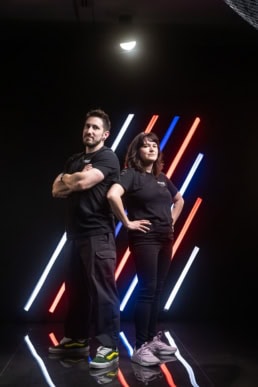
By David Loi | David Loi Studios | Dallas, TX
Dallas / Fort Worth is a soccer city right now whether you were expecting it or not, and FIFA World Cup 2026 coming to North Texas has accelerated that energy in a way that’s hard to ignore if you’re working in commercial photography here and paying attention to what brands are prioritizing.
When the opportunity came through Arcpoint Studios to shoot Tim Howard and Carli Lloyd for American Airlines & FIFA related content here in Dallas, I was in before the conversation was over. Arcpoint is the kind of production house that’s in the room with you, invested in the outcome the same way you are. A shoot with this much pressure around it needs that kind of energy behind it and they brought it on this one.
The Brief and Building a Studio for People Who Have Five Minutes
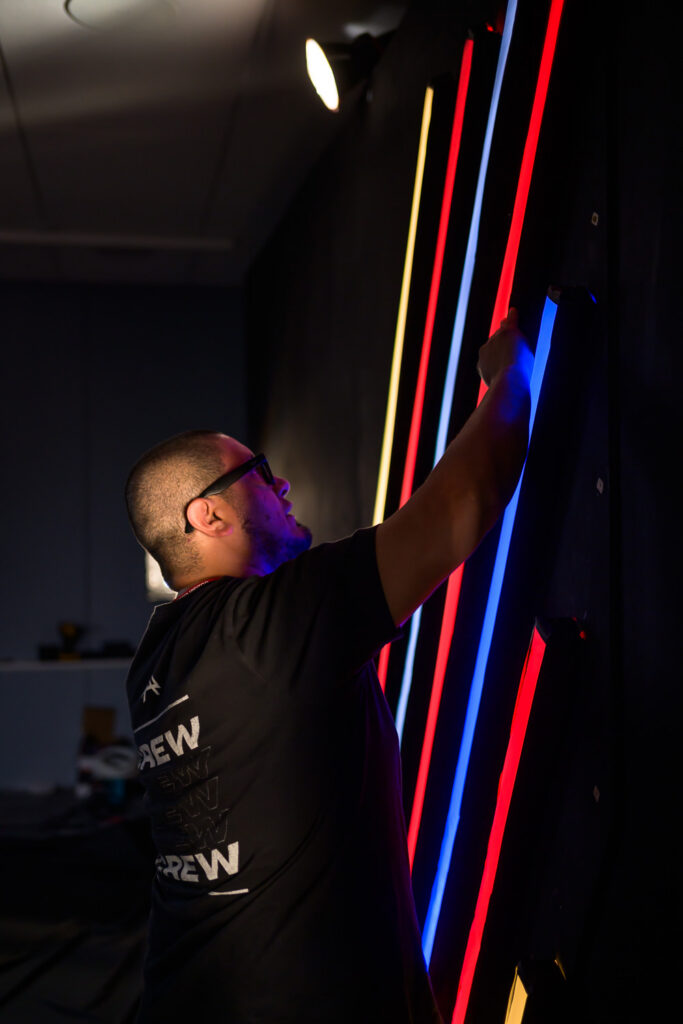
Before Tim Howard & Carli Lloyd even walks in front of your camera you’ve spent hours building a studio environment that has to be ready and performing before he arrives. Since American Airlines has a strong partnership with FIFA, we were tasked with making sure that American Airlines branding was very strong everywhere. We hired set builders for the background so that when a subject at that level shows up you get somewhere between five and ten minutes and your entire preparation exists to make those minutes count rather than waste them solving problems you should have solved at call time.
Arcpoint was tasked with capturing all of their social media content in 20 minutes total and I had 5 minutes per person for stills, which sounds like enough time until you’re actually in it and the clock is moving and the talent is in front of you and every frame has to count because there is no second session and there is no coming back tomorrow to get the shot you missed today.
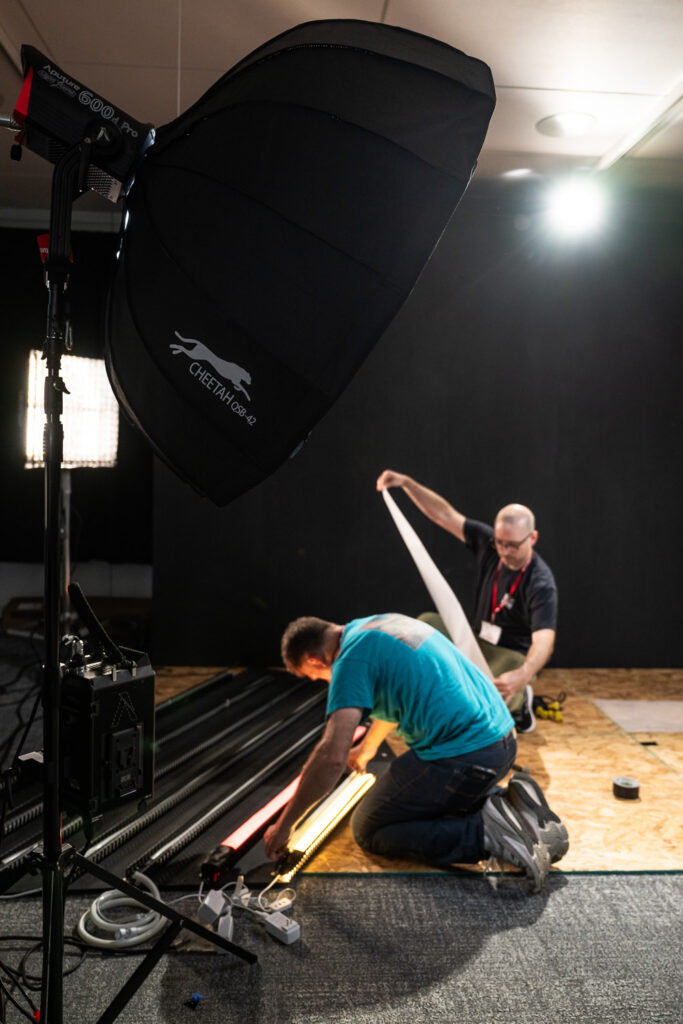
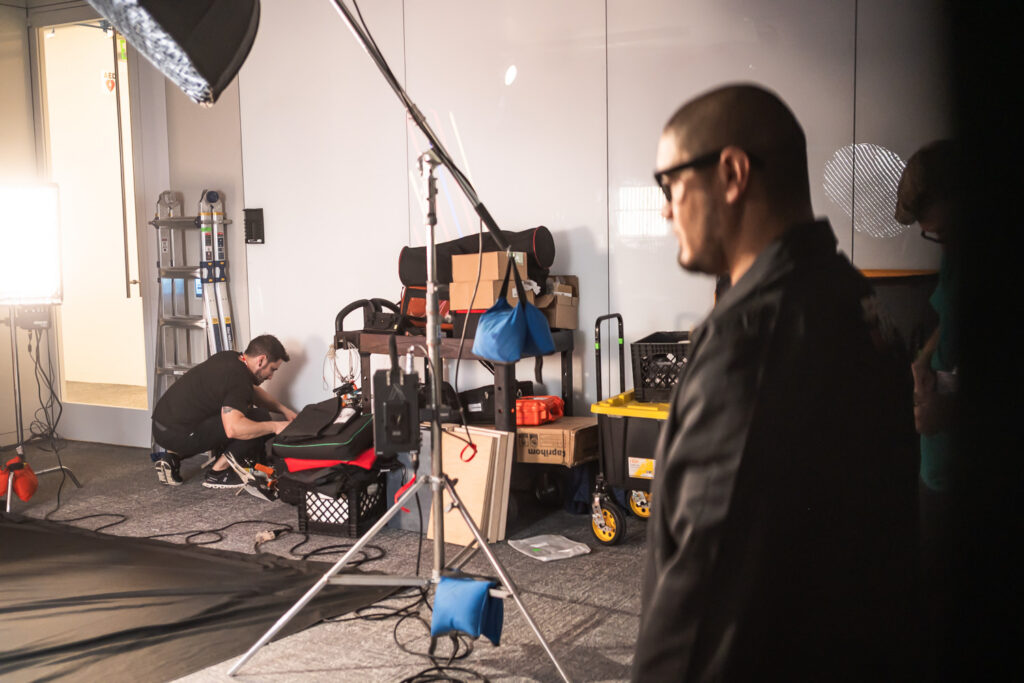
Athletes like Tim Howard and Carli Lloyd have full schedules and people managing every hour of their day and they give you the time they can give you, which means the studio build is the performance and the shoot is just executing what you already figured out. Every light & modifier position locked before they arrive, every gaffer tape marked for positioning, every role pre-defined, every shot tested prior to the actual shoot time, every potential problem already solved so that when the talent walks in the only thing left to think about is the human being in front of your camera.
The Lighting Challenge
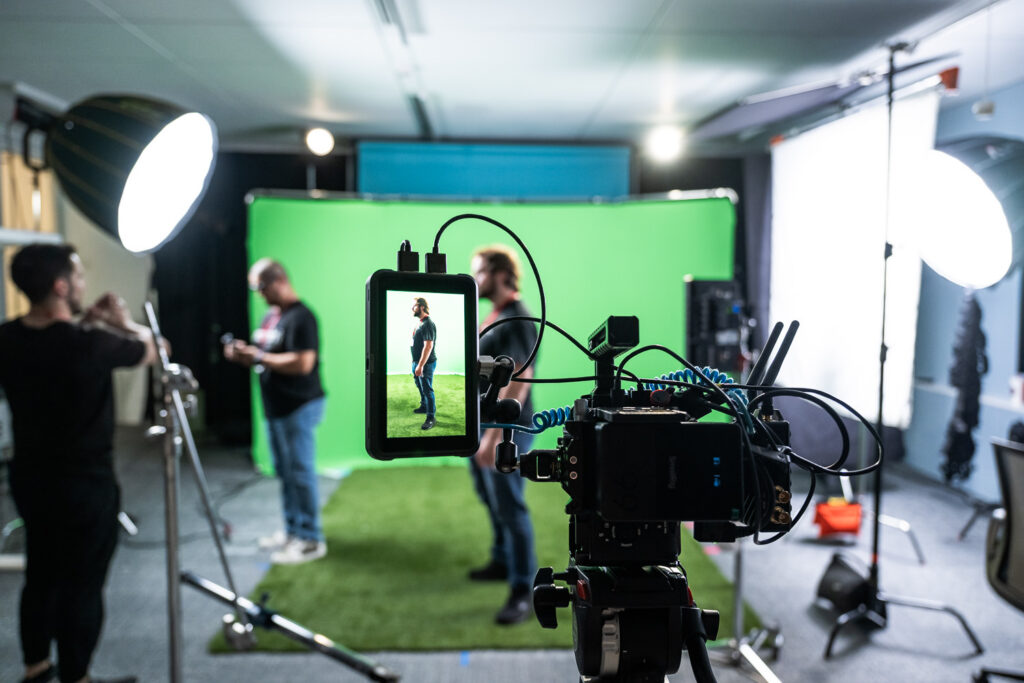
We had to turn a conference room into a full set studio, one side for stills, one side for motion. Any time you’re building a controlled studio environment for sports talent the lighting conversation starts with one question about what feeling the image needs to carry, and for American Airlines & FIFA campaign in Dallas, the answer was power and presence because these are athletes who defined American soccer at the highest level and the light had to hold that without overworking it.
We ran the Cheetah Stand large QPB-48 softboxes as the primary setup, giving us a broad wrapping key light that held shape across different subject positions without needing to re-strike between setups. Every minute spent adjusting light in a five minute window is a minute you’re not shooting and you can’t get it back.
Five Minutes With Tim Howard
When Tim Howard walks into a room and you understand immediately why he had the career he had and it has nothing to do with physical size. It’s calm, earned authority that fills the space without asking for attention. But he’s friendly and approachable at the same time. As much as you’d like to make more small talk, the window is short and we start shooting immediately. You don’t waste frames on setups you’re not fully confident in because every shot has to be intentional and every direction has to be clear and brief while you’re simultaneously reading the subject, adjusting the energy in the room, watching the monitor, and making creative decisions with the clock running. We pre-tested all the shots ahead of time, so that we were ready when they came in. We rehearsed and practiced it so that the directions were clean and clear.
We got what we came for and the frames carried exactly the weight they needed to!
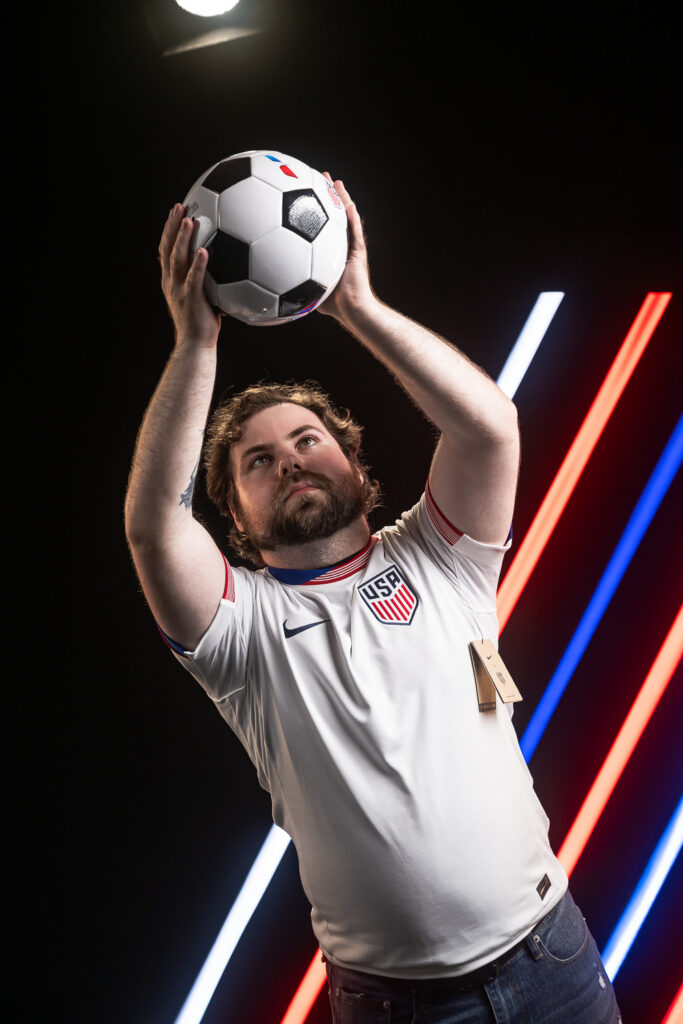
Practice shot of Conner and the final photo!
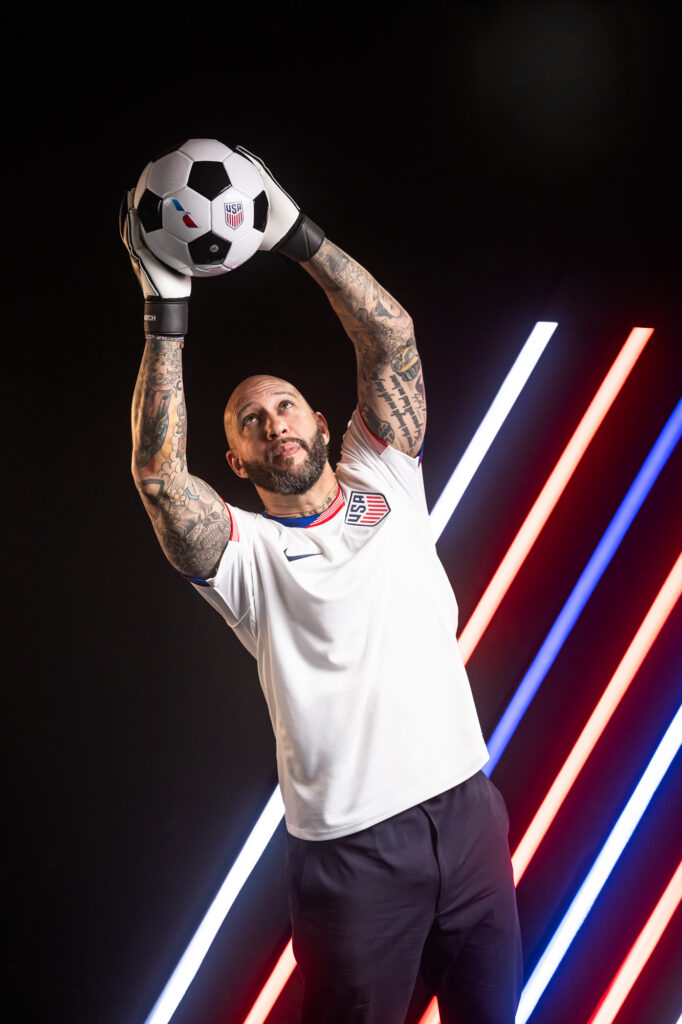
Carli Lloyd and Why the Same Setup Has to Read Differently
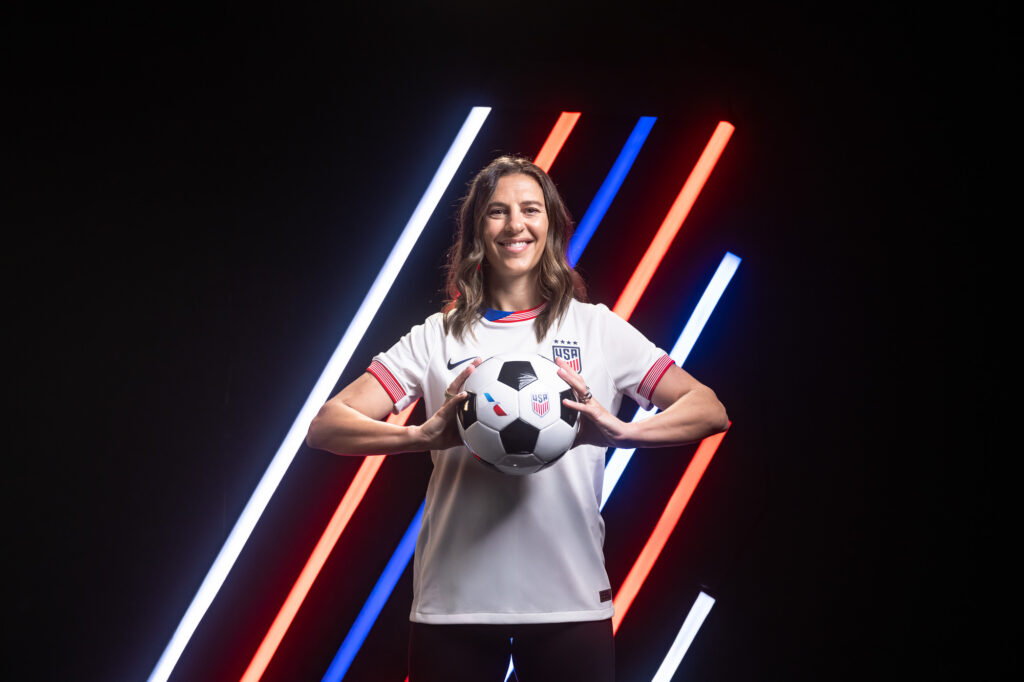
Carli Lloyd brings completely different energy into a studio than Tim Howard does and the lighting and framing that worked for one subject needed an honest read on whether it would serve the other before we committed to it. She worked with much more purpose in every movement she made. The approach had to shift because where Tim gave you stillness to work with, Carli gave you forward momentum and competitive fire and the challenge was capturing that specific energy without losing control of the frame in the same tight window we had just worked through.
The preparation from the build phase carried both sessions because when you’ve already solved every technical variable the shoot becomes purely about the person in front of you, and that’s when the work gets interesting.
Practice shot of Josey!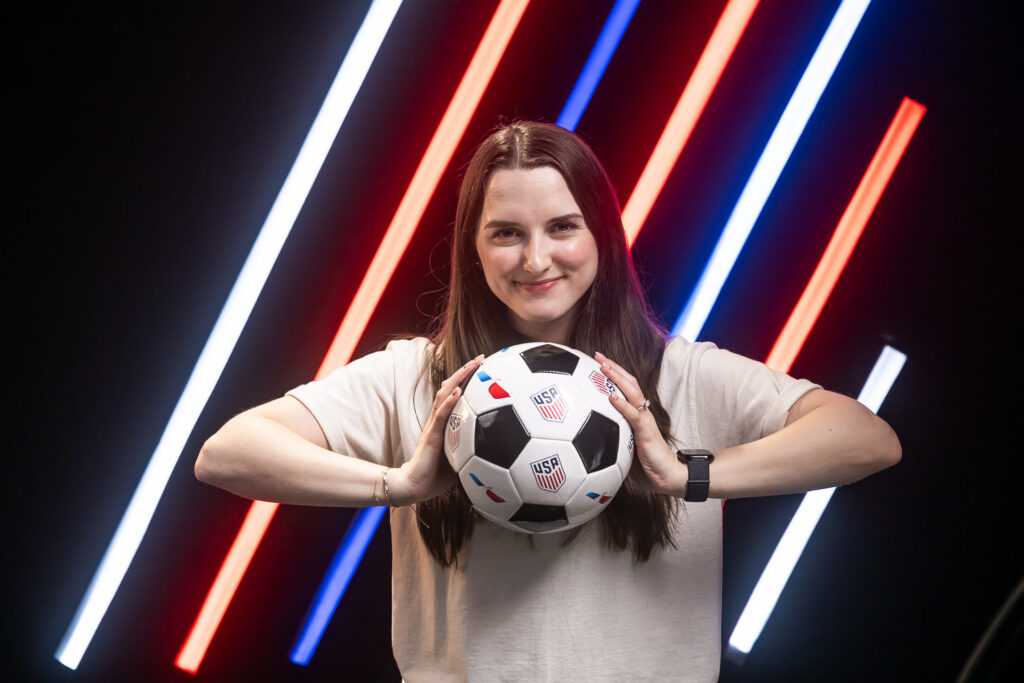
What FIFA Means for Dallas & Fort Worth Commercial Photography
I’ve shot significant projects in this city over the years including American Airlines, BMW, DFW Airport, and the Dallas Cowboys and Dallas has always been a stronger commercial photography market than people outside of Texas give it credit for, but FIFA World Cup 2026 changes the scale of that conversation in a way that’s going to be visible to the whole industry.
The volume of commercial content being built in and around Dallas & Fort Worth for this tournament is significant and it’s only going to grow as 2026 gets closer. Arcpoint Studios understood that early enough to be positioned for it and getting the call from them for a project like this felt like exactly the kind of work David Loi Studios was built for.
On Working With Arcpoint Studios.
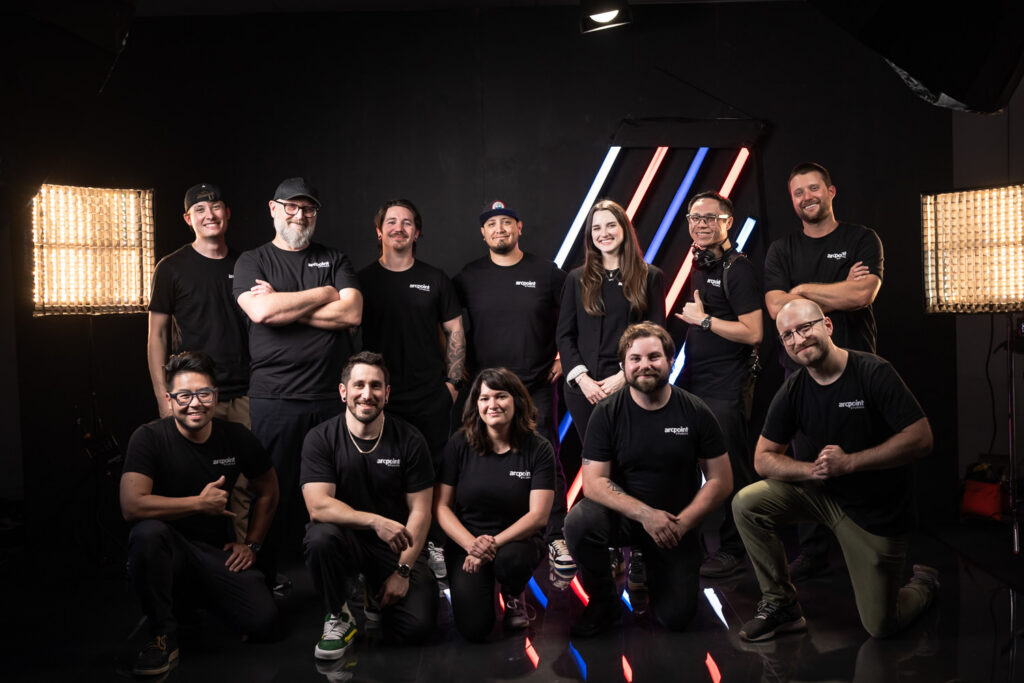
The best commercial shoots I’ve been part of have always had a production team that treats the photographer as a creative partner rather than a hired vendor and Arcpoint operates that way consistently. The communication before the shoot, the problem solving on the day, the shared investment in walking away with something great rather than just something finished.
When you find production partners who work that way you show up for them and you say so publicly because it’s not as common as it should be.
See the Work
If you want to see what ten minutes of preparation, hours of setup, and a team that shows up ready actually produces, the final images from this session are live on the site. Take a look at the full set and see what it looks like when everything comes together.
davidloistudios.com/clients-2/american-airlines
Let’s Work Together
FIFA World Cup 2026 is coming to Dallas and if you’re a brand, agency, or production house building content around the tournament and you need a commercial photographer who knows this market and can execute under pressure, reach out.
📍 Dallas, TX 🌐 davidloistudios.com 🤝 Represented by Wonderful Machine 📸 Gear partner: Cheetah Stand
#FIFA #WorldCup2026 #DallasSoccer #TimHoward #CarliLloyd #CommercialPhotography #DallasPhotographer #ArcpointStudios #BehindTheLens #CheetahStand #DFWCommercialPhotography #SportsPhotography #BTSPhotography #FIFA2026Dallas #DavidLoiStudios
My “Alice” Moment: Framing the Future at Dallas College
My “Alice” Moment: Framing the Future at Dallas College
By David Loi
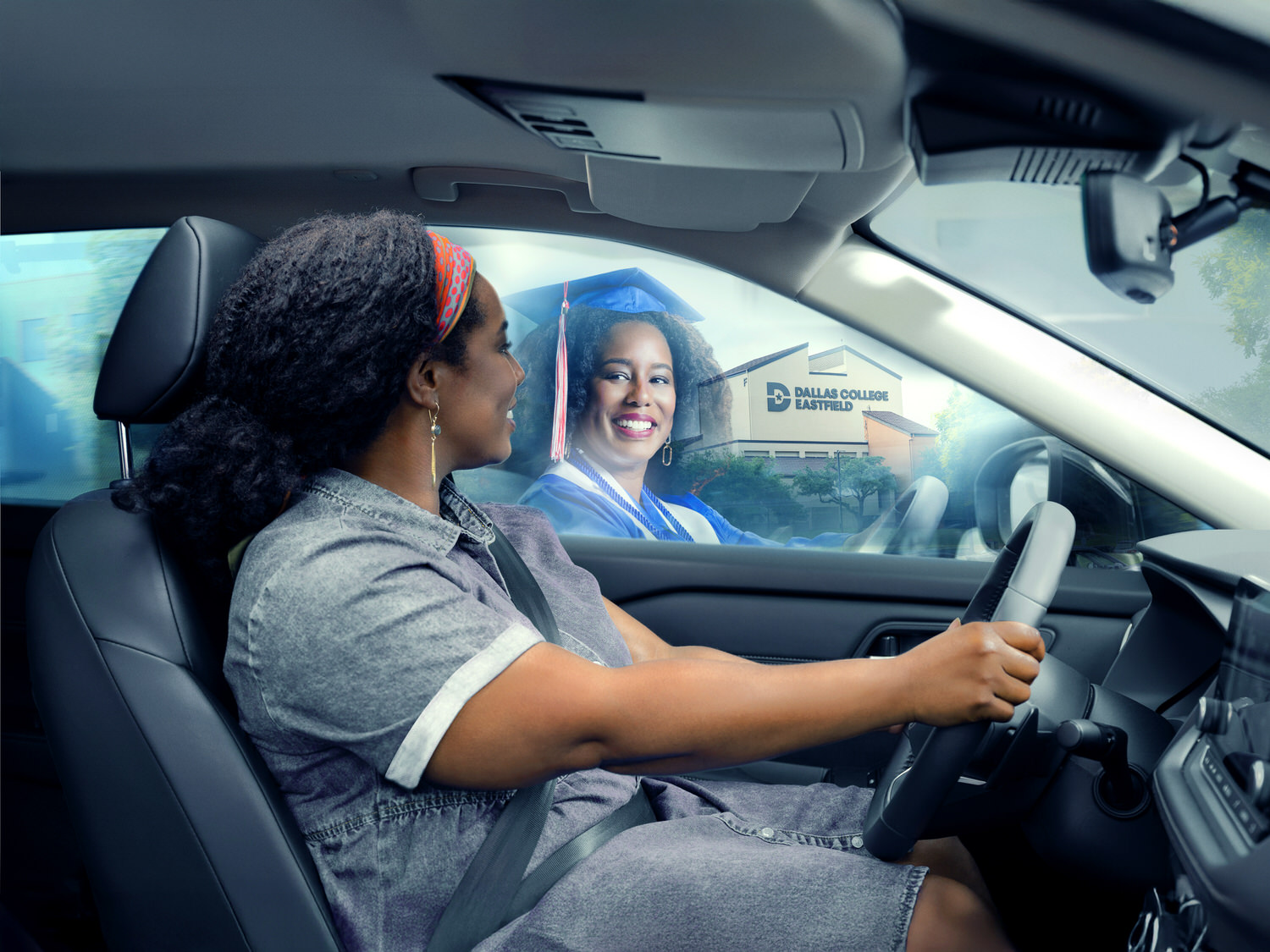
DALLAS, TX — Last year, David Loi Studios was tapped by Dallas College to anchor their “Future-Self” campaign. We found ourselves in the middle of a bustling campus, realizing that we weren’t just there to shoot special portraits of people for a school ad campaign – we were there to collapse time and show everyone what it would feel like to get a good education.
Like Alice in Wonderland, I prepared myself for a warren of adventures as we conceptualized how a future with education would look like. What depth and spectrum of colors did this Wonderland hold for Dallas College’s wonderful audience?
The assignment, coordinated with the sharp minds at Alpha Business Images (ABI), and our team, was deceptively simple in its premise: show the students of Dallas College not just as they are—earnest, hardworking, often balancing three lives at once—but as they are destined to be. We wanted to distill the spirit of an institution that serves as the bedrock for so many North Texas families. But we wanted to avoid the clichés of the “inspirational” brochure. We wanted something that felt like a haunting, beautiful encounter with one’s own potential.
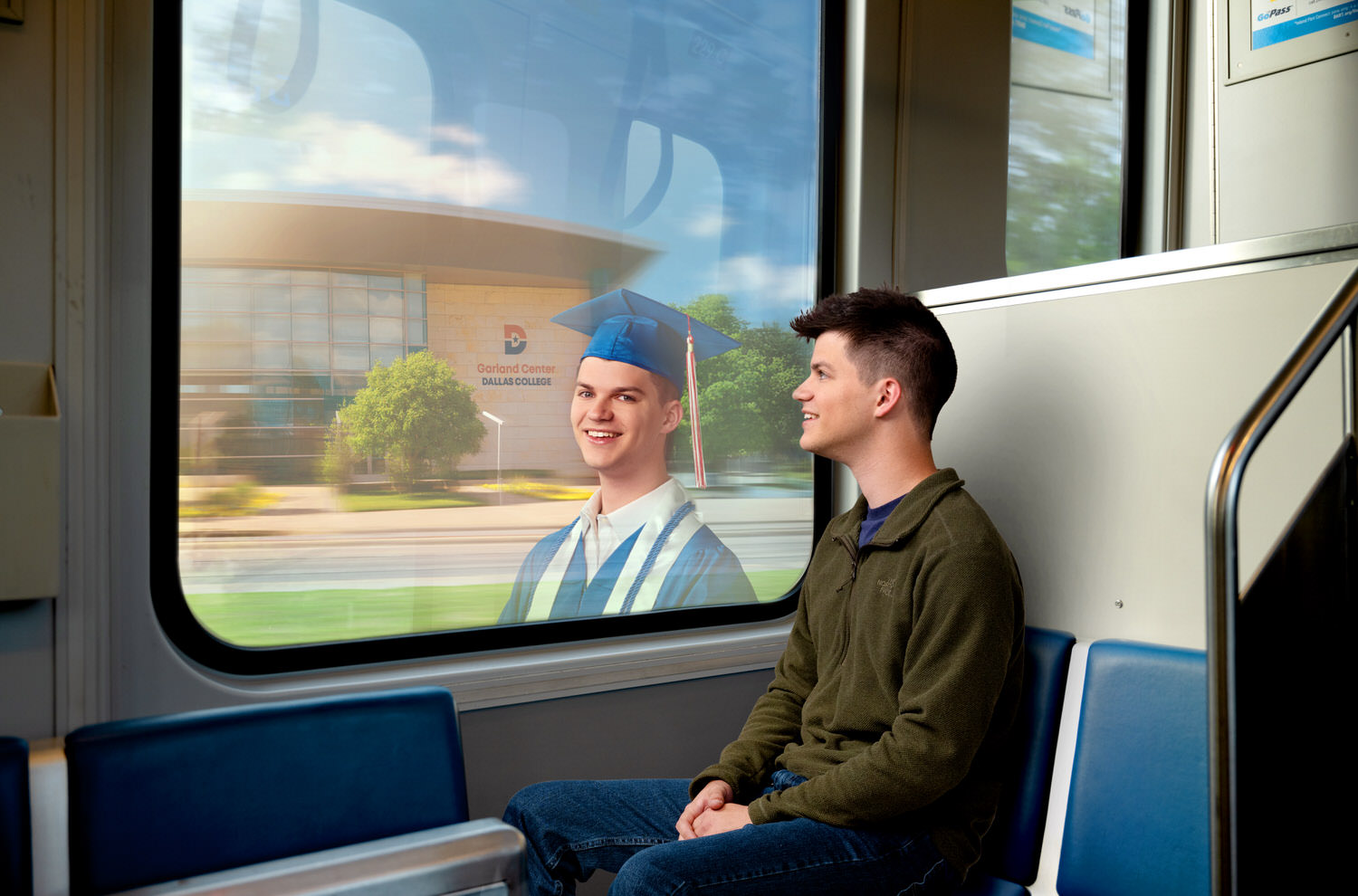
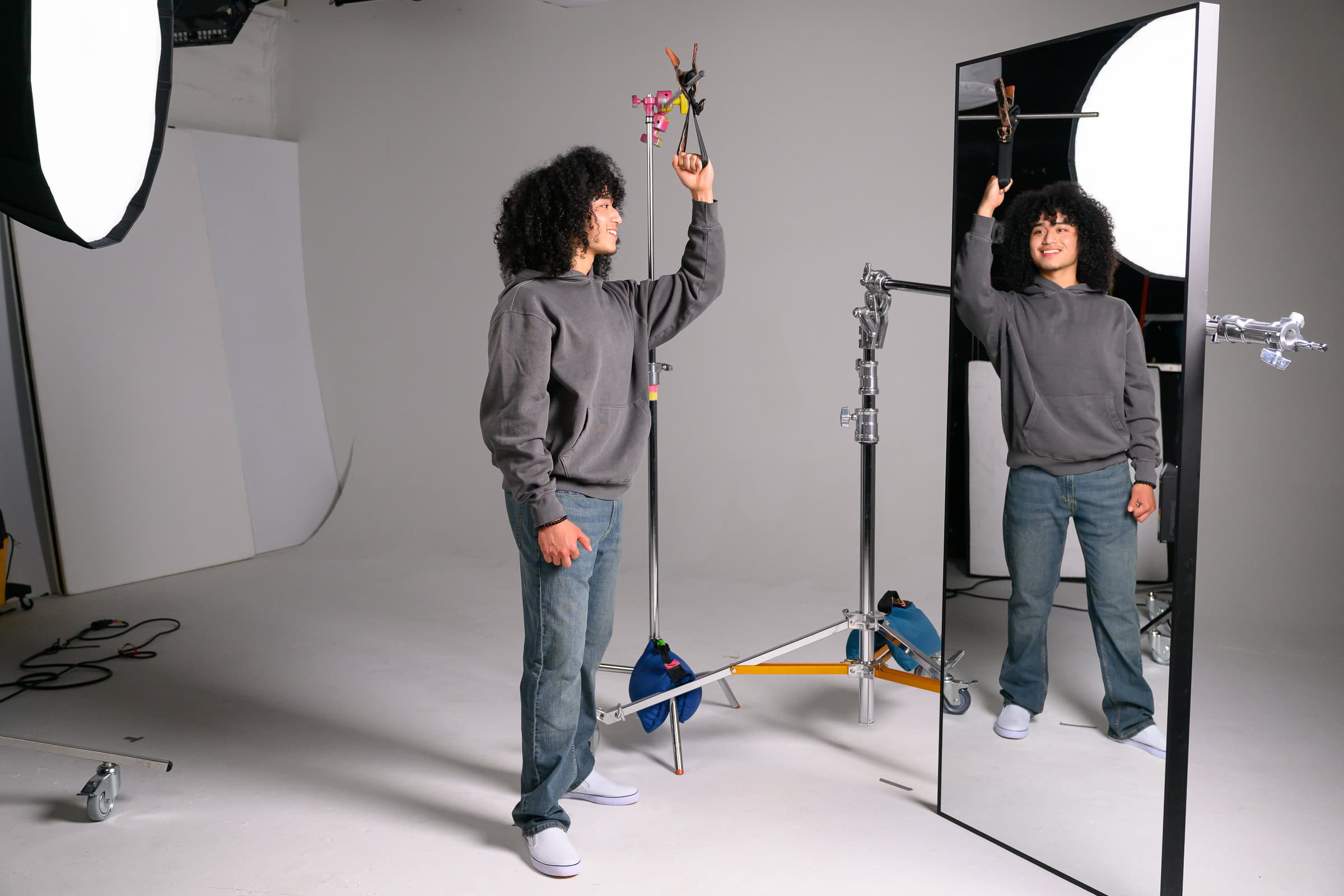
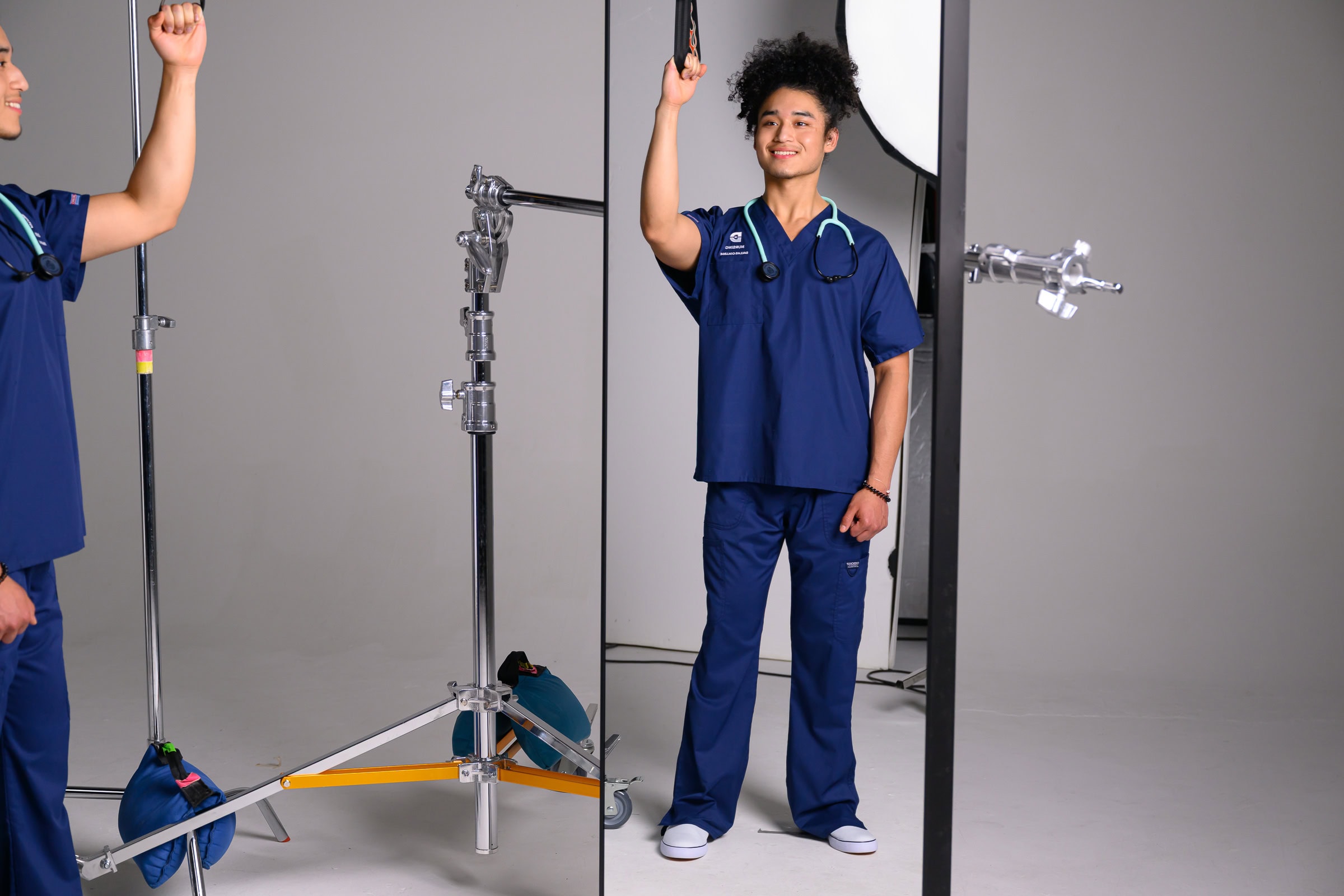
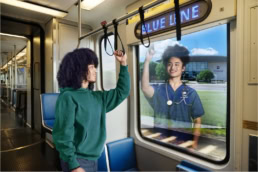
The concept centered on a series of photographs where a student looks into a mirror and sees their future self looking back. An aspiring engineer sees a professional in a hard hat; a culinary student sees a chef in a pristine white coat; an adult learner, returning to the classroom after decades in the workforce, finally sees themselves in a graduation gown.
In the Dallas-Fort Worth Metroplex, I like to say that good portrait photography is a contact sport (like good literature), and this project demanded more than just a trained eye. It demanded an almost surgical approach to lighting and composition.
The “Future-Self” images are puzzles in themselves. Each final image is a composite of multiple “plates”—individual shots taken from the exact same tripod position—stitched together in post-production to create a seamless reality.
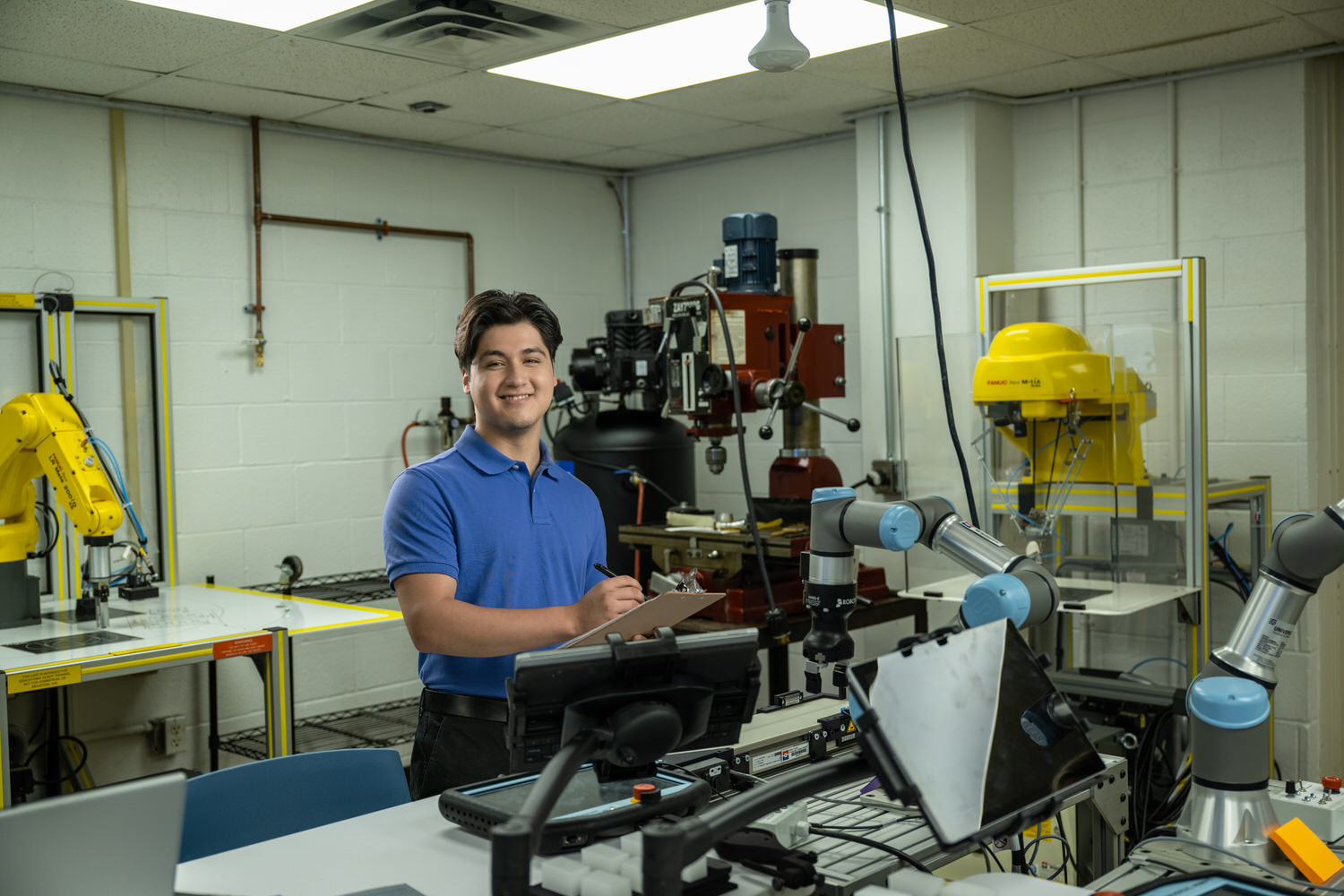
To get it right, we had to play a high-stakes game of geometry. We used Cheetah Stand heavy-duty booms to suspend the mirrors, but the mirror is a double-edged sword: it reflects the future, but it also reflects every light, cable, and stray person in the room. We spent hours “flagging” the scene—using black curtains and boards to kill unwanted reflections—ensuring that the only thing the camera saw was the narrative we were building.
There is a unique pressure when a client is on set watching the “tethered” capture in real-time. As the images popped up on the monitor, clients could see the raw outputs. Our audience weren’t just seeing a technical feat; they were seeing their mission statement rendered in high definition. In the smallest steps—the tilt of a chin, the straightening of a collar—we were showing that the future isn’t some distant, unreachable country. It is right here, in the reflection, waiting to be stepped into.
We featured over a dozen stories in this collection. Each one felt like a short film. We worked with culinary magnates in the making and engineers who were still mastering their first equations. The technical difficulty of the mirror-image shots required a deep knowledge of positioning; if the angle was off by even a fraction of an inch, the “future self” wouldn’t align with the “present self,” and the illusion would shatter.
But that challenge is exactly why the David Loi Studios team exists. We don’t just show up to document; we show up to build.
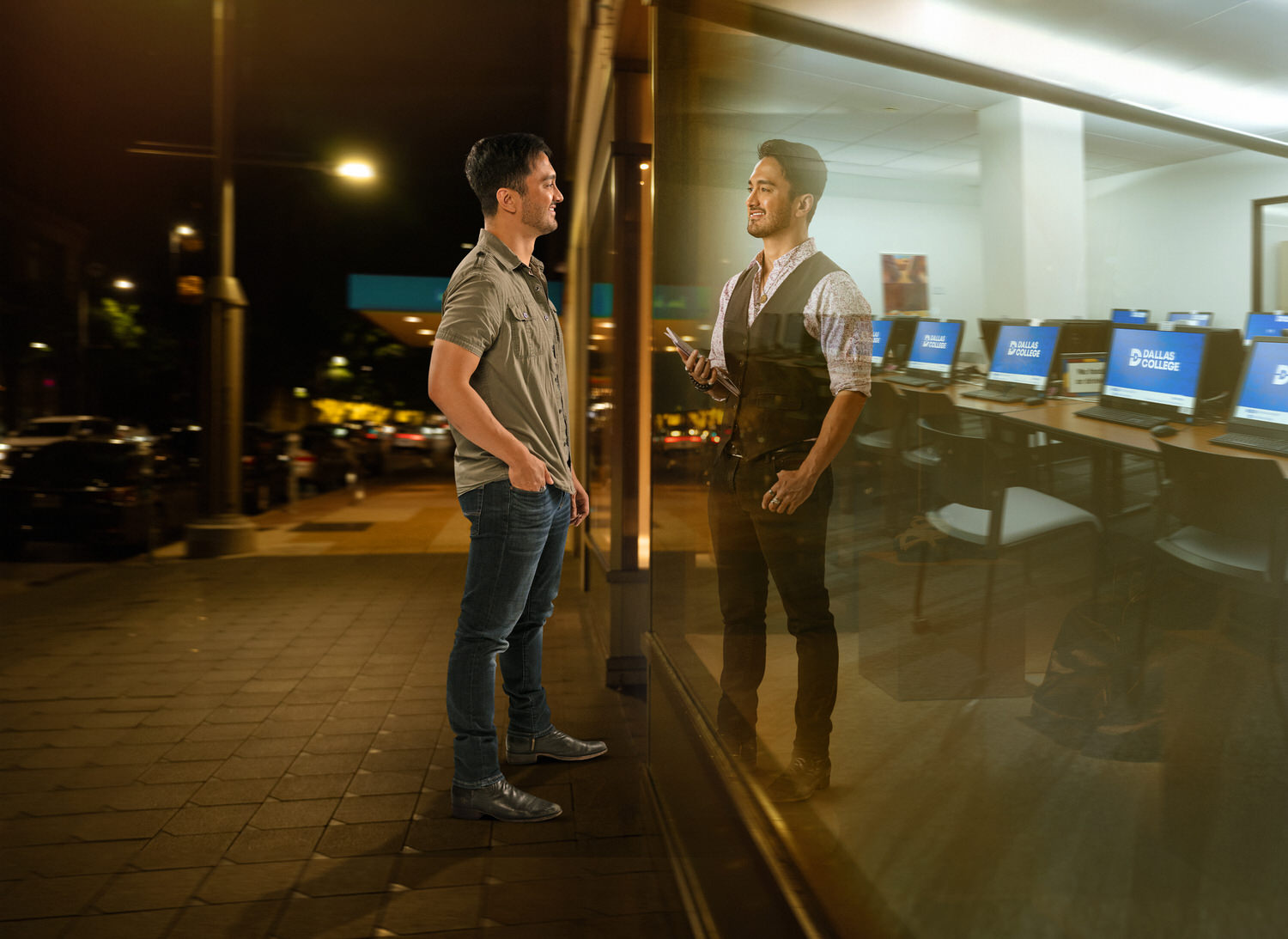
The Future-Self campaign ultimately became a testament to why so many students trust Dallas College until graduation. It’s about the proximity of the dream. Often, in the grind of midterms and commutes, students lose sight of why they started. Our goal was to create a visual reminder that the person they want to become is already looking back at them, urging them to keep going.
Standing there on set, surrounded by booms and flags and the hum of the city, I realized that these weren’t just portraits for a campaign. They were mirrors held up to the community. And when you look closely at the eyes of the students we photographed, you realize they aren’t just seeing a chef or an engineer. They are seeing a version of themselves that is finally, undeniably, real.
Behind the Scenes: Institutional Photography Services in Dallas, TX